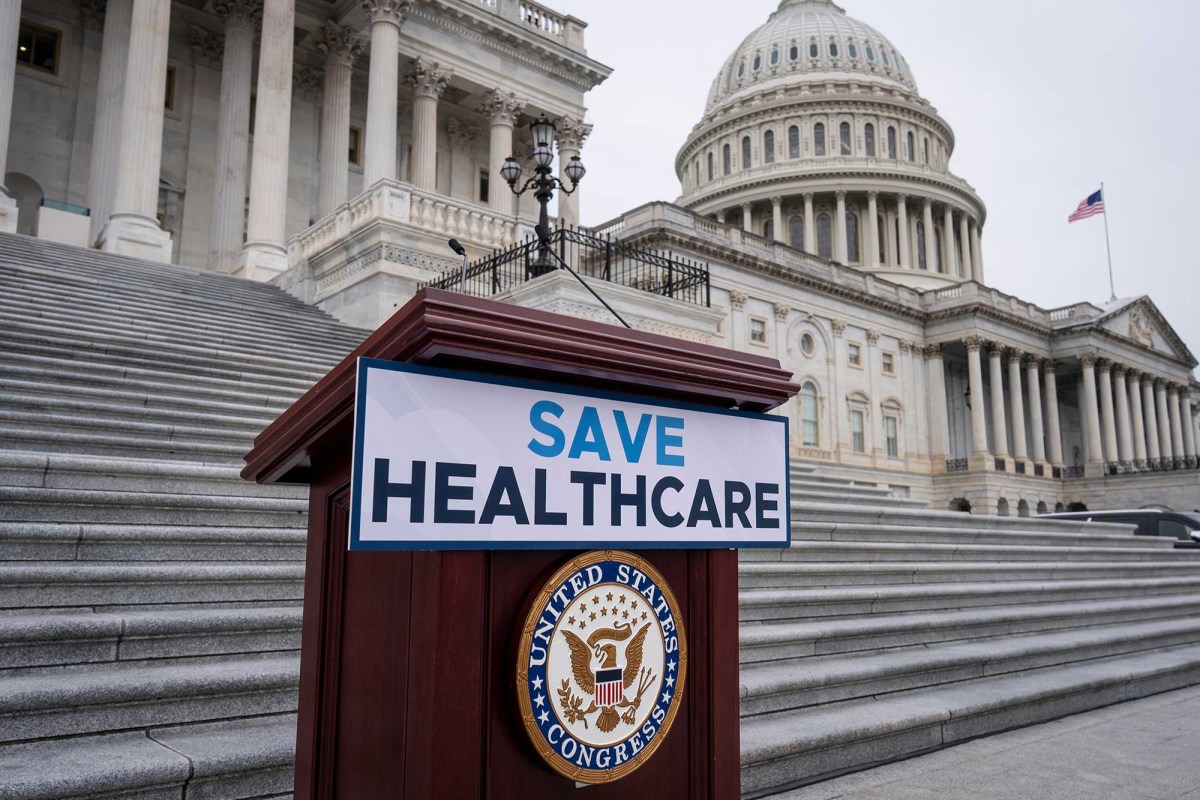
 Advocates rally outside the U.S. Capitol during a debate over healthcare legislation. Health care is one of the most policy-sensitive sectors in the American economy.
 Drug pricing, insurance coverage rules, and Medicare reimbursement rates are all set or heavily influenced by Congress — making health care one of the most policy-sensitive sectors in the market.
People notice health care names in Congress filings for a simple reason: health care is one of the biggest parts of the American economy. People need medicine, doctor visits, lab tests, and health coverage in good times and bad times. Because of that, health care companies are always in the news. They also sit close to the center of public policy. Congress talks about drug prices, insurance rules, Medicare, Medicaid, hospitals, privacy, and medical research every year. When a sector gets that much public attention, it is not surprising that health care stocks keep appearing in filings.
That does not mean every health care trade is special. Many of these companies are large, famous, and easy for investors to understand. But it does help explain why drug and insurance names show up again and again. Health care is not a niche corner of the market. It is a giant, daily part of life. Lawmakers and their families know the brands. Regular investors know the brands. Big funds own the brands. So when people read Congress filings and see another drug maker, insurer, or medical device company, the real answer is often simple: this is a huge sector that Congress touches all the time.
Health care is bigger than many people think
When most people hear the phrase health care stocks, they think of drug companies. That is only part of the picture. Health care is really a big group with many kinds of businesses. There are drug makers, insurance companies, pharmacy benefit managers, hospital chains, lab companies, device makers, and companies that help doctors handle records and billing. Some sell products to patients. Some sell services to hospitals. Some do both. A single filing can include a famous medicine company, a giant insurer, and a medical tools business, and all of them still fit under the same broad health care umbrella.
That size matters because large sectors attract more investor attention. Big sectors also have more public data, more analyst coverage, and more headlines. Investors often prefer companies they can follow. Health care gives them that. Earnings calls get attention. Drug trial news gets attention. Policy hearings get attention. Mergers get attention. Even routine updates about reimbursement rates or supply chains can move sentiment. This does not make the sector easy. It just makes it very visible.
Health care also touches nearly every family. People may not understand the full rules behind capital markets or mineral permitting, but they do understand prescriptions, premiums, and doctor bills. That makes health care stocks easier to talk about, easier to search for online, and easier to remember when they show up in public filings.
Congress has its hands on many parts of this sector
Another reason health care names keep showing up is that Congress helps shape the ground these companies stand on. Lawmakers debate how public programs pay for care. They look at the cost of drugs. They question insurance practices. They fund agencies that approve new medicines and monitor safety. They fight over spending bills that can affect hospitals, research centers, rural care, and public health programs.
This does not mean Congress controls every stock move. Markets still react to earnings, product launches, lawsuits, competition, patents, and the broader economy. But health care is a sector where policy matters more than it does in many other parts of the market. A change in reimbursement can matter. A hearing on pharmacy middlemen can matter. A new rule on drug pricing can matter. A shift in research funding can matter. Even when there is no final law, public debate alone can change how investors think about risk.
That makes health care stocks feel important to people who follow policy. It also makes them feel familiar. If Congress is already talking about the cost of insurance or the path of prescription drugs through the supply chain, then companies in that chain are going to stay in the spotlight.
Why drug companies draw so much attention
Drug makers are the most visible health care names for a reason. They make products that people know by name. Some sell medicines for very common conditions. Others sell specialty drugs that cost a lot and can change a company—s future if demand grows. A single successful drug can become a huge source of revenue. A failed trial can crush hopes just as fast.
Investors watch drug companies because the business can mix stability and surprise. Some big firms have many approved products and wide global sales. That can make them look steady compared with smaller biotech names. At the same time, new data, new approvals, or changes in competition can still move the stock. That mix often attracts attention from investors who want large, well-known companies but still want a reason for the price to change over time.
Drug companies also stay close to public debate. People argue over how much medicine should cost, how fast the government should approve new treatments, and how much public money should support research. These are not side issues. They go to the heart of how the business works. So when drug names appear in filings, the reason may be less mysterious than it first sounds. Investors are drawn to a sector where products matter, policy matters, and headlines never fully stop.
Why insurance companies keep appearing too
Insurance names may seem less exciting than drug companies, but they can be just as important. Health insurers sit at the center of how money flows through the system. They collect premiums, build provider networks, manage claims, and work with employers and government programs. They may not make a pill or a medical device, but they affect what care costs, which doctors are in network, and how much families pay out of pocket.
That makes insurance companies easy to watch and easy to debate. When premiums rise, people notice. When deductibles rise, people notice. When Congress holds a hearing on affordability, insurers often sit close to the center of the story. Even readers who do not know the details of the business understand the basic issue: health coverage costs real money every month, and changes in that cost can shape family budgets fast.
Investors may like insurance companies for different reasons than they like drug makers. Some insurers look attractive because they have recurring revenue and large customer bases. Some also have businesses beyond insurance, including pharmacy services, data tools, or care delivery. That can make them feel diversified. Others are linked to public programs, which means investors watch policy updates even more closely. Again, that does not make every filing meaningful by itself. It just explains why these names are so often part of the public conversation.
The middle of the system matters too
A lot of health care money moves through the middle of the system, not only at the ends. Pharmacy benefit managers, distributors, and service companies can play a major role in how drugs are priced, delivered, and paid for. These names are less famous to the average reader, but they matter. If Congress is asking how medicine moves from the factory to the patient, then the companies in that chain can come under real scrutiny.
That is one reason health care articles should not focus only on the biggest household names. Sometimes the more interesting story is in the middle. A company that helps manage claims, negotiate drug prices, or supply hospital tools may not get the same social media attention as a giant drug maker. But it can still be important in policy debates and still show up in filings for very practical reasons.
For readers, the main lesson is simple: health care is a system, not a single type of stock. When you see multiple health care names appear in filings, do not assume they all tell the same story. One may be a drug company with a patent story. One may be an insurer facing margin pressure. One may be a supply chain or service firm tied to cost control. The label health care is broad. The reasons investors buy within it can be very different.
Health care can look safer when markets feel shaky
Another reason health care names keep showing up is that some investors see the sector as more defensive than fast-moving growth sectors. People may delay buying a new gadget or taking a vacation when the economy feels weak. They are much less likely to stop taking medicine or drop health coverage without a serious reason. Demand can still change, but it often changes more slowly than demand in more cyclical industries.
That idea can make health care attractive during uncertain periods. Investors who want quality, cash flow, dividends, or large established businesses may look at drug makers and insurers when they want less drama than they get from smaller tech or speculative names. A filing that shows a move into a health care stock may be less about chasing a big surprise and more about choosing something the buyer sees as sturdy.
Of course, health care is not risk free. Drug pipelines disappoint. Insurance margins can get squeezed. Court fights happen. Rules change. But compared with sectors that swing almost entirely on consumer confidence or commodity prices, parts of health care can look steadier. That is another reason these names keep showing up in public disclosures.
What readers should actually watch
If you are reading filings, it helps to look past the sector label and ask better questions. Is the company a drug maker, insurer, device maker, or service provider? Is the trade in a giant, diversified company or in a narrower name with one big product story? Is the company tied closely to Medicare, Medicaid, or another public program? Has Congress been talking about a topic that touches that company—s business model? Has the company been in the news for earnings, approvals, pricing fights, or large deals?
These questions matter because they turn a vague headline into a clearer picture. The phrase health care stock can sound important, but it is only the starting point. A smart reader wants to know where the company sits in the system and why someone might be interested in it right now.
It also helps to stay calm. A public filing is not magic. It does not tell you the full thesis, the size of the broader portfolio, or the long-term plan. It shows a piece of information. That piece can still be useful. But it is best used as a clue, not as a complete answer.
What these filings do not prove
Public filings can show that a trade happened. They do not show every thought behind it. They do not tell you whether the buyer planned to hold for a week or a year. They do not tell you what other positions the person already owned. They do not tell you whether the trade was part of a larger family strategy, a rebalancing move, or a simple decision to add exposure to a well-known sector.
That is why it is better to use careful language. Health care names keep showing up because health care is large, familiar, policy-heavy, and always relevant. That is a strong explanation on its own. You do not need to jump to extreme claims when the basic structure of the sector already explains a lot.
The simple bottom line
Drug and insurance names keep showing up in Congress filings because health care sits at the crossroads of daily life, business, and government policy. It is one of the largest sectors in the market. It includes many of the most famous companies in America. Congress debates costs, coverage, research, and regulation all the time. Investors know the brands, follow the headlines, and often see parts of the sector as long-term holdings.
So when health care stocks appear again and again in public disclosures, the pattern is not as strange as it may first seem. It is what you would expect from a giant sector that touches nearly everyone, stays in the news, and sits close to major policy debates year after year.