Executive Branch · Immigration
Markwayne Mullin DHS Changes: What They Mean for ICE and You
The new Homeland Security chief is quietly pulling back parts of Kristi Noem's playbook. Here's a plain-English breakdown of what shifted, what stayed the same, and who feels it.
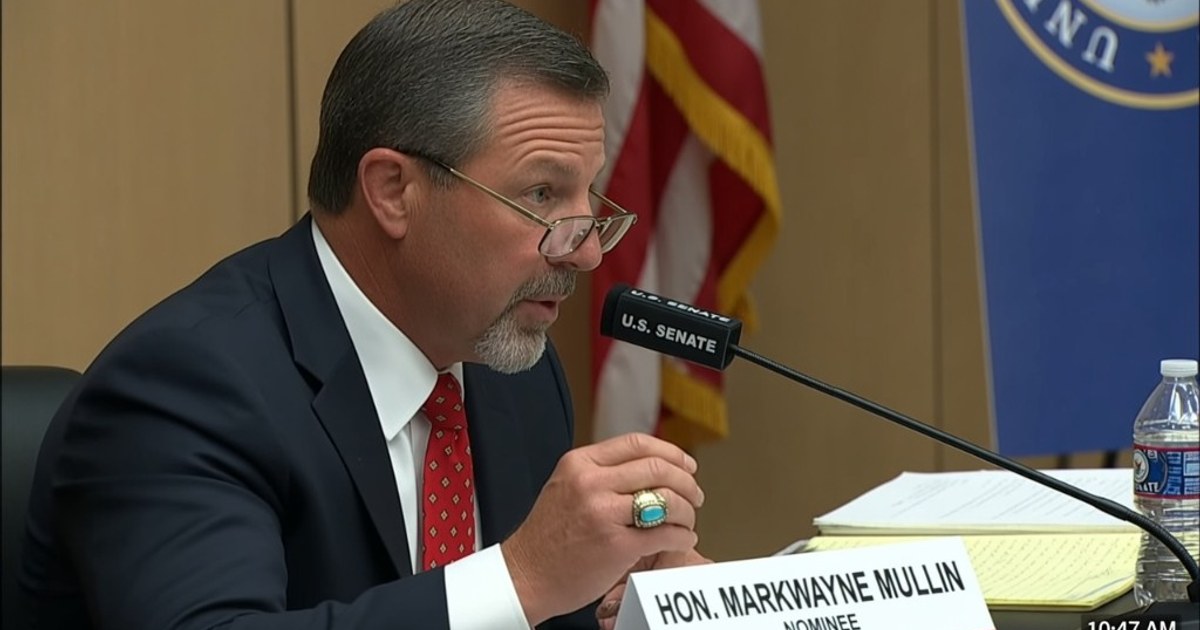
Markwayne Mullin is quietly rewriting how ICE operates. In his first three weeks as Homeland Security Secretary, he has made four big moves. He paused a plan to build giant detention warehouses. He told agents to stop entering homes without a judge's signature. He killed a contract rule that was choking the agency. And he ordered a cost review of deportation flights.
He did not slow deportations. He will not say he will. The goal of removing millions of people without legal status is still the goal. What Mullin is changing is how the work gets done — and who sees it happen.
That shift is the story. It replaces Kristi Noem's high-profile, headline-driven approach with something quieter and more procedural. It also raises a hard question: is this a real reset, or the same policy in a new jacket?
Mullin was sworn in on March 24, 2026, as the 9th Secretary of DHS. The Senate confirmed him 54-45. Two Democrats crossed over. One Republican, Rand Paul, voted no.
Fast Facts
- Confirmed: March 23, 2026, by a 54-45 Senate vote.
- Sworn in: March 24, 2026.
- Replaces: Kristi Noem, who resigned after two deaths in Minneapolis.
- Runs: A department with more than 250,000 employees and 22 agencies, including ICE, CBP, TSA, FEMA, and the Coast Guard.
- Key shift: Judicial warrants for home entries, paused detention mega-sites, and cost reviews of Noem-era programs.
Who Is Markwayne Mullin?
Before DHS, Mullin spent three years in the Senate and ten years in the House. He is a plumber by trade. He built his family's plumbing shop into the biggest service company in his region of Oklahoma. He is also a former pro MMA fighter with a 5-0 record.
He is loyal to President Trump. He backs mass deportations. He is seen as less flashy than Kristi Noem, his predecessor. That is part of why he got the job. The White House wanted DHS out of the daily headlines.
His confirmation hearing got heated. Senator Paul, who ran the hearing, accused him of once calling Paul a "freaking snake." Paul voted no. Two Democrats, John Fetterman and Martin Heinrich, voted yes. Heinrich said Mullin is hard to bully. That matters, because many people in both parties wondered if the new secretary would just take orders from the White House.
The Changes So Far
The warehouse pause matters. ICE had been buying huge buildings in places like Surprise, Arizona, Roxbury, New Jersey, and Social Circle, Georgia. Some were meant to hold 7,500 to 10,000 people. Local leaders, including Republicans, said water, sewer, and police services could not handle that. A few towns sued. One mayor locked the water meter.
The contract change also matters. Under Noem, all DHS deals over $100,000 needed her personal sign-off. About one of every three contracts got stuck in that bottleneck. Disaster relief was held up. Both parties complained. Mullin moved the cap way up, to $25 million. That frees up the agency heads under him to move.
Noem vs. Mullin: The Side-By-Side
| Policy Area | Under Kristi Noem | Under Markwayne Mullin |
|---|---|---|
| Home entries | Agents could use ICE-signed "administrative warrants" | Judicial warrants required, except in hot pursuit |
| Detention sites | Buying giant warehouses; capacity up to 10,000 beds | Paused and under review |
| Contracts | Secretary sign-off over $100,000 | Secretary sign-off over $25 million |
| Public posture | High-profile, media-forward | Quieter, more managerial |
| Enforcement model | ICE on the front lines in city streets | Shift toward local-police handoffs via 287(g) |
| Deportations | Sweeping; non-criminals a fast-growing share | Continuing; non-criminal share beginning to drop |
What It Means for the Future of ICE
The clearest shift is the model. Mullin wants ICE to be less of a street force and more of a transport service. The idea: local sheriffs and police arrest people. ICE picks them up from jail. That runs through a decades-old program called 287(g). More than 1,600 agreements are in place, covering 39 states.
This is not a softer policy. It can be broader. In Florida, about 1,800 state troopers are trained to ask about immigration status on traffic stops. Local agencies there have made more than 10,000 immigration-related arrests since last August, separate from ICE. Civil-rights groups call it "show me your papers" policing. Backers call it a force multiplier.
Detention numbers tell part of the story. The average daily ICE detention population fell from about 72,000 in January to about 63,000 in March. That is the first drop since Trump retook office. It is still far above Biden-era levels.
Detention fell about 12% between January and March. It is still roughly 30% above the late-Biden peak.
Seven million people sit on ICE's "non-detained docket" — people the agency believes it can deport but has not yet picked up. That pool is not going away. And inside the White House, top advisor Stephen Miller and border czar Tom Homan still drive day-to-day strategy. Miller reportedly leads a 10 a.m. daily call pushing DHS on arrest and removal numbers.
So ICE will likely be busier, not less busy. It will just look different. Fewer images of agents breaking down doors. More handoffs from county jails. More traffic stops that end in deportation.
The forecast: ICE's future looks less like a street force and more like a jail shuttle. Expect broader reach, quieter optics, and a longer tail as the agency works through that 7-million-person backlog.
What It Means for You (the Average American)
Most Americans will not meet an ICE agent. But a few things are starting to touch everyone.
Your community's budget. The mega-warehouse plans were about to hit small towns hard. Social Circle, Georgia, has about 5,000 residents. ICE wanted to hold up to 10,000 people in one facility there. That would have broken local water and sewer systems. The pause means mayors, sheriffs, and school boards get a little more time to plan. Some towns are still fighting the plans in court.
Your Fourth Amendment. The shift back toward judicial warrants is a civil-liberties story. The Fourth Amendment protects homes and businesses from unreasonable searches. Noem's DHS had argued that immigrants without legal status have fewer such protections. Mullin is walking that back, at least in words. Legal scholars note that his "hot pursuit" exception could still be stretched. Senator Richard Blumenthal has asked him in writing to formally scrap the 2025 memo. As of this writing, that has not happened.
Your wallet. Mullin says each deportation costs about $18,225. DHS has chartered hundreds of deportation flights a year. A cost review is overdue. Whether any of it leads to real savings is an open question. About 100,000 DHS workers are still working without a paycheck because of the funding fight.
Your airport. Mullin has floated sending more CBP officers to airports in sanctuary cities. If it happens, travelers in Chicago, Los Angeles, Boston, and Seattle could face different screening patterns than travelers in Dallas or Miami. It would be the first time in decades that federal immigration enforcement was openly targeted at specific U.S. cities based on their local politics.
Your polls. Public opinion has moved. A January 2026 survey found 63% of Americans think ICE has gone too far. A CBS News poll in February found 56% want ICE operations to decrease, while 24% want them to ramp up. Those numbers are part of the political reason Mullin is dialing back the optics.
What It Means for Mexican and Latino Communities
Mexican nationals are the single largest group ICE deports. In 2025, ICE flew home about 38,000 Mexican citizens, out of roughly 142,000 total removals. In March 2026, Mexicans made up 66% of all Border Patrol encounters.
So when the rules change, these communities feel it first. Here is what is actually different on the ground.
At your door
Under Noem, an ICE agent could show up with an "administrative warrant" — a paper ICE prints for itself — and force entry. Under Mullin's new policy, that is supposed to stop. Agents now need a judicial warrant, signed by a judge, unless they are chasing someone who runs inside.
In practice: if agents knock, ask them to slide the warrant under the door. Read the top of the page. If it says "Department of Homeland Security" and is signed by an ICE officer, it is administrative. That does not give them the right to enter.
If it is signed by a judge and names your address, it does.
At a traffic stop
This is where the real risk has moved. In Florida, 1,800 state troopers are now trained to check immigration status on routine stops. A broken tail light or tinted windows can escalate. Florida local agencies alone have made more than 10,000 immigration-related arrests since last August. Texas is on a similar track. Under Mullin's model, those arrests increasingly feed ICE pickups from county jails — no home visit needed.
At work
Worksite enforcement has not stopped, but the flashy raids have slowed since Minneapolis. Detention population dropped about 12% between January and March, and the non-criminal share of that population is now shrinking for the first time since Trump returned to office. The warehouse pause also matters: many of the planned sites would have held Mexican and Central American detainees in towns with few Spanish-speaking lawyers.
Know Your Rights at the Door
- Do not open the door. You can talk through it.
- Ask for a judicial warrant. Have them slide it under the door. If it is not signed by a judge and does not name your address, you do not have to let them in.
- Do not answer questions about where you were born or how you entered the country. You have the right to stay silent.
- Do not sign anything without talking to a lawyer first.
- If agents enter anyway, do not resist. State clearly: "I do not consent to this search." Write down badge numbers and what you saw.
- Have a plan. Memorize the phone number of a lawyer or family member. Make sure someone knows where your kids go to school and who picks them up.
Inside Mexico, the government has opened about ten welcome centers near the U.S. border. Only about a third of deportees check in. Many walk straight back to their hometowns or try the journey again. Mexico has said it can accept more deportees but cannot legally hold anyone it receives.
For U.S.-born Latino citizens, the biggest shift is visibility. With enforcement moving from ICE raids to local traffic stops, racial profiling risk goes up, not down. The ACLU has documented a pattern of Latino drivers — including citizens — being stopped for minor infractions and asked about status.
The Politics: Pushback From Both Sides
Mullin is getting it from everyone.
On the right, conservative groups say he is too slow and too soft. Mike Howell of the Oversight Project told Politico that during Mullin's "grace period," things have happened that cut against the mass-deportation cause. Republican Senator Jim Justice of West Virginia said the GOP may have to step in if the agency is still "sputtering" three months from now.
On the left, Senator Richard Blumenthal has dismissed the changes as mostly for show. He argues Mullin has not touched the underlying rules — only the public face of them. Immigrant advocacy groups note that the administration's stated goal — to deport millions — is unchanged.
The DHS shutdown is the squeeze point. Democrats want real limits on ICE tactics inside any funding deal. The White House is tying the deal to a separate voting law bill, the SAVE America Act. That has stalled talks. Senator Susan Collins, who runs the Appropriations Committee, is still looking for a path.
What to Watch Next
Three things will tell us if Mullin's shift is real or cosmetic.
First, does he formally rescind the 2025 memo that let agents use administrative warrants to enter homes? A hearing room promise and a signed order are not the same thing.
Second, what happens to the paused warehouse contracts? A pause can become a cancellation. Or it can become a quiet restart in six months.
Third, who ends up driving policy — Mullin, or Stephen Miller's 10 a.m. call? If Mullin truly sets the agenda, expect fewer sweeps and more targeted arrests. If Miller wins the tug of war, expect the numbers to stay high and the tactics to stay aggressive, just with a quieter press strategy.
The next 90 days will tell.
Frequently Asked Questions
Who is Markwayne Mullin?
Mullin is the 9th Secretary of the Department of Homeland Security. He was a U.S. senator from Oklahoma before President Trump nominated him. The Senate confirmed him on March 23, 2026, in a 54-45 vote. He was sworn in the next day.
What changes has Mullin made at DHS so far?
In his first weeks he told ICE agents to get judicial warrants before entering homes or businesses, paused the purchase of giant detention warehouses, rescinded a rule that required his predecessor to sign off on contracts over $100,000, and ordered cost-benefit reviews of deportation flights.
Did Mullin stop deportations?
No. Deportations are continuing. Mullin has said the goal of removing millions of people without legal status is unchanged. What he is changing is how the work gets done, not whether it gets done.
How does this affect Mexican immigrants?
Mexican nationals make up the single largest group deported each year. Under Mullin, home raids may slow, but local police partnerships through the 287(g) program are expanding. Traffic stops and jail pickups are now the main way many Mexican immigrants are being taken into custody.
Will ICE stop using administrative warrants?
Not entirely. Mullin said ICE will rely on judicial warrants to enter a home or business, unless agents are chasing someone. Senator Richard Blumenthal has asked Mullin in writing to formally pull back a 2025 memo that allowed warrantless home entries. As of mid-April 2026, that memo has not been publicly rescinded.
Is DHS still shut down?
The DHS funding fight has dragged on for about 50 days. About 100,000 DHS employees have been working without pay. Senate Republicans and Democrats are still negotiating, and President Trump has tied any deal to a separate voting law bill.
Sources
- CNN Politics, "Markwayne Mullin has started making policy changes at DHS," April 2, 2026. https://www.cnn.com/2026/04/02/politics/markwayne-mullin-dhs-contracts-warehouses
- CBS News, "Markwayne Mullin sworn in as DHS secretary after Senate confirmation," March 24, 2026. https://www.cbsnews.com/news/markwayne-mullin-confirmed-dhs-secretary-senate/
- NPR, "Markwayne Mullin confirmed as the next secretary of Homeland Security," March 23, 2026. https://www.npr.org/2026/03/23/g-s1-114813/markwayne-mullin-confirmed-homeland-security
- Courthouse News Service, "Top Democrat presses DHS Secretary Mullin on judicial warrants," March 31, 2026. https://www.courthousenews.com/top-democrat-presses-dhs-secretary-mullin-on-judicial-warrants/
- CBS News, "ICE detained fewer non-criminals since Minnesota crackdown," April 2026. https://www.cbsnews.com/news/ice-detentions-decline-non-criminals-minnesota-crackdown-data/
- U.S. Department of Homeland Security, "Senate Confirms Markwayne Mullin as Secretary," March 24, 2026. https://www.dhs.gov/news/2026/03/24/us-senate-confirms-markwayne-mullin-secretary-department-homeland-security
- NPR, "After the Minnesota surge, ICE is moving to a quieter enforcement approach," April 4, 2026. https://www.npr.org/2026/04/04/nx-s1-5768273/after-minnesota-ice-surge-shift-to-quieter-enforcement
- Washington Office on Latin America (WOLA), "U.S.-Mexico Border Update," April 2026. https://www.wola.org/2026/04/u-s-mexico-border-update-migration-data-dhs-shutdown-and-new-management-abuses-in-ice-custody-border-walls/
- Fortune, "States push against immigration detention plans," April 9, 2026. https://fortune.com/2026/04/09/dhs-ice-immigration-states-warehouses-converted-detention-centers/
- NewsNation, "DHS Secretary Mullin could target 'sanctuary' international flights," April 2026. https://www.newsnationnow.com/us-news/immigration/dhs-mullin-sanctuary-flights/
- Latin Times, "New DHS Chief Doubles Down on Mass Deportations," April 2026. https://www.latintimes.com/new-dhs-chief-doubles-down-mass-deportations-says-we-only-want-right-kind-immigrants-596643
- Christian Science Monitor, "ICE wants to expand detention," April 7, 2026. https://www.csmonitor.com/USA/Justice/2026/0407/ice-detention-trump-immigration
WhatsUpCongress is a nonpartisan civic platform. This article is based on public reporting and official statements. Figures change as new data is released.