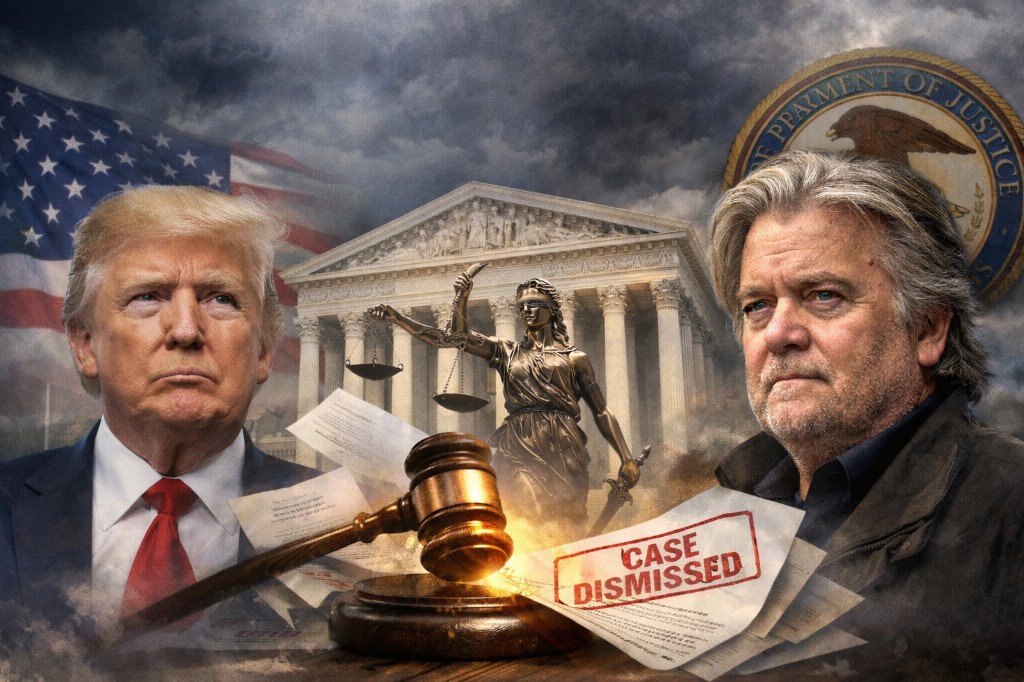
On April 6, 2026, the Supreme Court removed the last legal barrier between Steve Bannon and a clean record — raising urgent questions about presidential power, equal justice, and whether Congress can still hold anyone accountable.
What Happened
The United States Supreme Court cleared the way for President Donald Trump's Department of Justice to dismiss the criminal case against Steve Bannon. Bannon, a former top adviser to Trump, was convicted in 2022 for defying a subpoena from the House committee that investigated the January 6, 2021, Capitol riot. He already served four months in prison for that conviction. Now, thanks to this Supreme Court action, the case is heading back to a lower court where it is expected to be thrown out entirely.[1]
The Court vacated — or set aside — the ruling from the U.S. Court of Appeals for the D.C. Circuit that had upheld Bannon's conviction. Both the DOJ and Bannon's legal team had asked the justices to do exactly this. With that appeals court ruling wiped away, the trial judge can now grant the DOJ's pending motion to dismiss the original indictment.[2]
Key takeaway: The Supreme Court did not officially dismiss the case itself. It removed the appellate ruling that was blocking dismissal, then sent the case back to the trial court where the Trump DOJ has already asked the judge to throw it out.
Who Is Steve Bannon?
Steve Bannon is a political strategist who served as chief strategist in the White House during the first year of Trump's first term. He became one of the most influential voices in right-wing politics. Before his time in the White House, Bannon ran Breitbart News, a conservative media outlet.
Bannon's legal troubles go back several years. In 2020, he was indicted on federal fraud charges connected to a nonprofit called "We Build The Wall." Trump pardoned him for those charges in January 2021.[6] Then came the January 6 investigation. The House Select Committee sent Bannon a subpoena — a legal order requiring someone to show up and share information. Bannon refused entirely. He did not hand over documents, and he did not sit for an interview.
Timeline of Key Events
- January 6, 2021 — Supporters of President Trump attack the U.S. Capitol. Congress later forms a select committee to investigate.
- October 2021 — The House committee subpoenas Bannon for documents and testimony. He refuses to comply.
- July 2022 — A federal jury convicts Bannon on two counts of contempt of Congress. He is sentenced to four months in prison.
- Summer 2024 — The Supreme Court refuses Bannon's emergency request to stay free during his appeal. He reports to prison and serves his sentence.
- February 2026 — The Trump DOJ tells the Supreme Court it wants to dismiss the case, calling it "in the interests of justice."
- April 6, 2026 — The Supreme Court vacates the appeals court ruling and sends the case back to the trial court for expected dismissal.
Bannon's Legal Argument
Bannon did not simply ignore the subpoena without reason — at least, that was his legal argument. His lawyers said he relied on the advice of his attorneys, who told him not to respond to the committee's demands. The reason? Trump had claimed executive privilege over some of the information the committee wanted. Executive privilege is a legal concept that allows a president to keep certain White House communications private.
Bannon's lawyers argued that his actions were not "willful" because he genuinely believed he was following proper legal guidance. The federal law on contempt of Congress says a person must "willfully" refuse to comply in order to be guilty. How courts define that word was at the heart of the legal fight.
The appeals court disagreed. The judges found that acting on a lawyer's advice was not a valid defense under existing precedent.[3] But now, with the case heading back to the lower court for dismissal, those important legal questions will go unanswered. No court will set a clear rule about what "willfully" means in these cases.
Why Did the DOJ Drop the Case?
This is where things get political. The DOJ under President Biden brought the case against Bannon. Now, the DOJ under President Trump wants to drop it. The department did not give a detailed explanation. It simply stated that dismissal was a matter of "prosecutorial discretion."[4]
The government has determined in its prosecutorial discretion that dismissal of this criminal case is in the interests of justice.
— Department of Justice filing to the Supreme Court
Critics say this is a clear example of a president using the justice system to protect his allies. Bannon was convicted by a jury, his conviction was upheld on appeal, and he served prison time. To now wipe the slate clean strikes many observers as a troubling use of presidential power over law enforcement.
Supporters argue the opposite. They say the prosecution was politically motivated from the start. They point out that contempt of Congress charges are rare and that the Biden-era DOJ targeted Bannon because of his close ties to Trump. From this point of view, dropping the case corrects an injustice.
It is worth noting that this move fits a pattern. Trump has issued pardons and clemency to many people connected to the January 6 events. Dismissing Bannon's case is part of a broader effort to undo the legal consequences that came out of the Capitol riot investigation.
The Role of Executive Privilege
One of the big legal ideas at the heart of this case is executive privilege. Presidents have long claimed the right to keep certain White House conversations secret. The idea is that a president needs honest, private advice from staff in order to do the job well.
But executive privilege has limits. Courts have ruled in the past that it does not give a president the ability to block an investigation entirely. The January 6 committee was a congressional investigation, and the law generally requires people to comply with congressional subpoenas.
Bannon's situation was unusual because he was not working in the White House at the time of the subpoena. He had left the administration years earlier. Still, Trump claimed executive privilege over some of the information the committee sought, and Bannon used that as the basis for not responding.
Because the case is now being dismissed rather than fully decided, courts will not issue a final ruling on how executive privilege works in this kind of situation. That leaves the legal landscape unclear for the future. The next time Congress subpoenas a political figure who refuses to comply, the rules will still be murky.
What Does This Mean for Average Americans?
This is the question that matters most to people who are not lawyers or political insiders. Here is why this case is important beyond the headlines.
Congressional oversight — Congress uses subpoenas to investigate the government and hold people accountable. If defying a subpoena can lead to a conviction that gets wiped away by the next president, future witnesses may simply refuse to show up.
DOJ independence — The DOJ is supposed to enforce the law without regard to politics. When a new administration drops a case involving a close ally, it raises doubts about whether the law applies equally to everyone.
Legal gray areas — Important questions about executive privilege and what "willfully" means in contempt cases will go unanswered. Future disputes will be harder to resolve because no precedent was set.
A growing pattern — This adds to a trend of presidents using their power to help allies avoid consequences. Whether you see that as correcting injustice or abusing power, the pattern itself affects how Americans view their government.
At its core, this case is about accountability. When powerful people are able to avoid legal consequences, it sends a message about who the law is really for.
What Happens Next?
The case now goes back to the federal trial court in Washington, D.C. U.S. Attorney Jeanine Pirro has filed a motion to dismiss the indictment.[5] Given that both the prosecution and the defense want the case dropped, the judge is expected to grant that motion. When that happens, Bannon's conviction will be wiped from the record — even though he already served his prison time.[7]
Meanwhile, the broader debate about January 6 accountability, executive power, and the independence of the justice system will continue. This Supreme Court action does not end those conversations. If anything, it makes them more urgent.
The Bottom Line
The Supreme Court's decision to clear the path for dismissal of Steve Bannon's criminal case is a significant moment in American law and politics. It raises real questions about the balance of power between Congress and the presidency, the independence of federal prosecutors, and whether the legal system treats everyone the same.
No matter where you stand politically, this case is worth paying attention to. The principles at stake — accountability, equal justice, and the rule of law — affect every single American.
Sources: See the live article page for numbered citations and outbound links to CNN, SCOTUSblog, NPR, NBC News, Bloomberg, the Washington Post, and the Jerusalem Post (April 6, 2026).