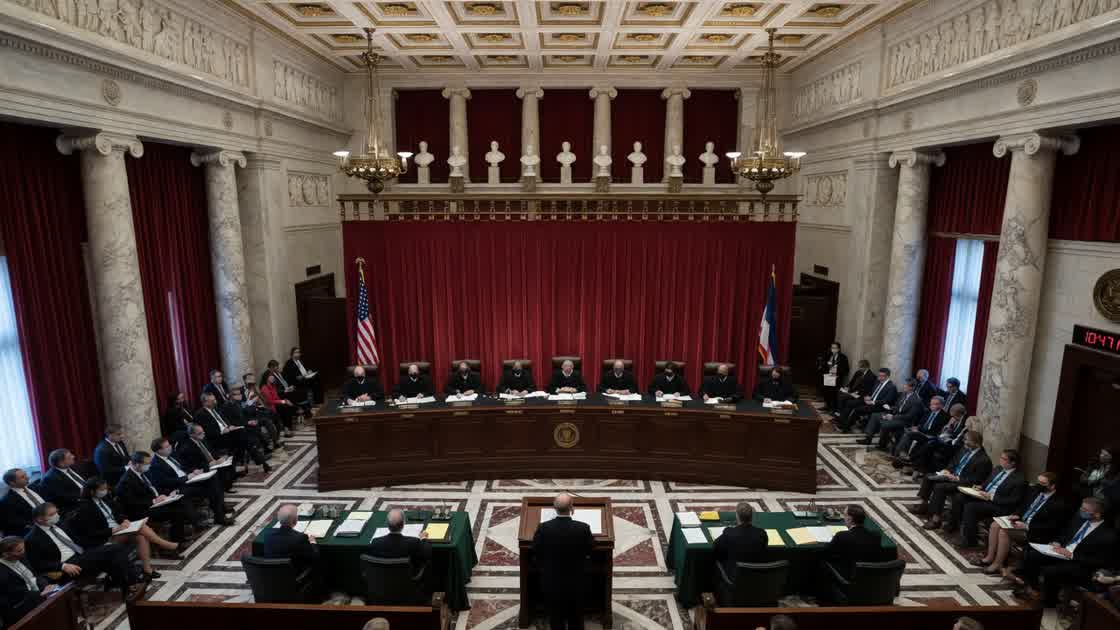
Supreme Court Limits the Voting Rights Act in Louisiana v. Callais
A 6–3 ruling does not erase the Voting Rights Act. But it changes how the law works in real life — and may reshape elections for years to come.
Louisiana v. Callais
On April 29, 2026, the U.S. Supreme Court handed down one of its biggest voting rights rulings in decades. The case is called Louisiana v. Callais. The vote was 6 to 3.
The Court did not strike down the Voting Rights Act of 1965. The law is still on the books. But the ruling makes it much harder to use Section 2 of that law to challenge unfair voting maps. Justice Elena Kagan wrote in her dissent that the decision leaves Section 2 all but a dead letter.
Both sides of the Court agreed on one thing: this case will shape elections for years to come. Here's what happened, what the Court said, and what it means for voters.
The case in plain English
Every ten years, states redraw their congressional maps. They do this after the Census. Louisiana drew a new map in 2022. The map had only one district where Black voters were the majority. Black residents make up about a third of Louisiana's population.
A group of Black voters sued. They said the map watered down their votes. A federal judge agreed. The judge said the map likely broke Section 2 of the Voting Rights Act.
Section 2 is a key part of the law. It bans voting rules and maps that hurt voters because of their race. For about 40 years, courts used Section 2 to strike down maps that weakened minority voting power.
After the judge's ruling, Louisiana's lawmakers drew a new map. This one had two majority-Black districts out of six. It was called SB8.
Then a different group of voters sued. They said the new map was a racial gerrymander. A gerrymander is when lawmakers draw district lines to help one group. The challengers said Louisiana used race too much in drawing SB8. A three-judge panel agreed and blocked the map.
The case went to the Supreme Court. The justices heard it twice. The first round was in March 2025. The Court asked for a second round in October 2025 with a wider question. The final ruling came down on April 29, 2026.
What the majority said
Justice Samuel Alito wrote the main opinion. Chief Justice John Roberts and Justices Clarence Thomas, Neil Gorsuch, Brett Kavanaugh, and Amy Coney Barrett joined him.
The majority said the Constitution almost never lets the government treat people differently based on race. Drawing a district mainly based on race, they said, is a form of racial sorting.
The Court did not toss out Section 2. But it changed how Section 2 works in practice. Going forward, people who sue must show a strong inference of intentional discrimination.
That is a much higher bar than before.
For decades, plaintiffs could win by showing that a map's effects hurt minority voters. They did not have to prove that lawmakers meant to discriminate. The new ruling shifts the focus from effects to intent.
Alito wrote that several things have changed since the 1980s. Voting now lines up closely with political party. The Court has also said that judges cannot block partisan gerrymanders — maps drawn to favor one party. New computer tools let people test many possible maps. All of this, Alito wrote, means the old way of judging Section 2 cases no longer fits.
Justice Thomas wrote a separate opinion. Justice Gorsuch joined him. Thomas said the Court should go further. He argued that Section 2 should not apply to map-drawing at all.
What the dissent said
Justice Kagan wrote the dissent. Justices Sonia Sotomayor and Ketanji Brown Jackson joined her.
Kagan said the ruling guts Section 2 without saying so out loud. She called the decision the latest chapter in the majority's now-completed demolition
of the Voting Rights Act.
Today's decision renders Section 2 all but a dead letter.
Justice Elena Kagan, dissentingIn her view, requiring proof of intent makes Section 2 almost impossible to enforce. Lawmakers rarely admit they drew a map to hurt minority voters. That is why Congress changed the law in 1982. Lawmakers wanted people to be able to prove their case using the effects of a map, not just hidden motives.
Kagan also pointed to Allen v. Milligan, a 2023 Supreme Court case from Alabama. In that ruling, the Court told Alabama to redraw its map to add a second majority-Black district. The same Court has now reached a different result for Louisiana, just three years later.
How we got here
The Voting Rights Act was passed in 1965. President Lyndon Johnson signed it after years of civil rights protests. The law was meant to break down barriers that had kept Black Americans from voting in the South.
Two parts of the law became famous. Section 5 required certain states to get federal approval before changing their voting rules. This was called preclearance. Section 2 banned voting rules that discriminated by race anywhere in the country.
Four cases shaped the road to Callais. Each one moved the Court closer to where it landed this week.
Thornburg v. Gingles
Set the test for Section 2 vote-dilution claims. Plaintiffs could win by showing the map's effects hurt minority voters.
Shelby County v. Holder
Took down Section 5 preclearance. After this, Section 2 became the main tool against unfair voting laws and maps.
Allen v. Milligan
Upheld a Section 2 challenge against Alabama. Many watchers thought Section 2 had survived. Callais shows that view was too hopeful.
Rucho v. Common Cause
Said federal courts cannot block partisan gerrymanders. Combined with Callais, this leaves few tools to challenge map-drawing.
What changes now
In the short term, Louisiana must use a different map for the 2026 midterm elections. State lawmakers and courts will sort out the details. Louisiana's primary is currently set for May 16, 2026. State officials and members of Congress disagree on whether a new map can be drawn in time.
In the long term, the ruling could affect dozens of districts. Several Republican-led states — including Texas, Missouri, North Carolina, and Ohio — have already redrawn their maps. Florida is reportedly looking at doing the same. Some Democratic-led states, such as California, have also redrawn maps.
Some analysts say the ruling could change up to 19 majority-minority districts across the country. That could shrink the number of Black and Hispanic members of Congress. Other analysts say the impact will be smaller. The real number will depend on how state legislatures act and how lower courts apply the new rules.
The ruling also raises a bigger question. Section 2 has been the main shield against racial discrimination in voting since 1965. Without it at full strength, what comes next?
What this means for everyday Americans
Most readers will not feel this ruling tomorrow morning. But over the next few election cycles, it could touch your life in real ways.
Your congressional district may change. Several states have already begun redrawing their maps. Texas, Missouri, North Carolina, Ohio, and possibly Florida are on that list. California has redrawn too. If you live in any of these states, your district lines — and your representative — could shift before you cast your next vote.
Your representative may change without you moving. Redistricting can move you from one district to another overnight. Your neighbors stay the same. The candidate on your ballot may not.
Some communities will lose voting power. In places where Black or Hispanic voters were the majority of one district, those districts could be redrawn. That makes it harder for those communities to elect the candidate of their choice. The number of Black and Hispanic members of Congress could shrink.
A lot stays the same. This ruling does not change voter ID rules. It does not change how you register. It does not change mail voting, early voting, or polling place hours. Those are separate state laws.
- Your congressional district lines
- The representative on your ballot
- The makeup of your state's House delegation
- Minority voting power in your area
- Voter ID rules
- How you register to vote
- Mail voting and early voting
- Polling place hours
- Your right to vote
The biggest change is the map you vote inside. Maps decide a lot in American politics. They decide which votes count more. They decide which voices get heard.
The role of Congress
The Supreme Court reads laws. Congress writes them. Lawmakers in Washington can pass new voting rights protections if they choose. Several bills have tried to update the Voting Rights Act in recent years. The John R. Lewis Voting Rights Advancement Act is one example. None of these bills have become law.
Some members of Congress have already called for new legislation in response to Callais. Others say the Court got it right. The next steps will depend on which party controls Congress after the 2026 midterms — and whether either side has the votes to move a bill through both chambers. Track how your members vote on voting rights and other major bills on our scorecard.
State governments also play a part. Some states have passed their own voting rights laws. California, New York, and Connecticut have state-level Voting Rights Acts. These state laws may now matter even more.
Why this case is different
Most Supreme Court cases turn on narrow legal questions. Callais touches something deeper. It is about the meaning of equal protection under the Fourteenth and Fifteenth Amendments. Those amendments were passed after the Civil War. They were meant to protect formerly enslaved people from being denied the vote.
The majority said the Constitution requires the government to treat each person as an individual, not as a member of a racial group. The dissent said the same Constitution lets Congress fix the harms of past discrimination.
These two views have clashed for decades. Callais is the latest round in that long debate. It will not be the last. (For more on how the Court is reshaping the balance of power, see our explainer on bills in Congress to limit presidential power.)
Frequently asked questions
Did the Supreme Court strike down the Voting Rights Act?
No. The Voting Rights Act of 1965 is still on the books. But the ruling in Louisiana v. Callais makes it much harder to use Section 2 to challenge unfair voting maps. Justice Kagan's dissent said the ruling leaves Section 2 "all but a dead letter."
What is Section 2 of the Voting Rights Act?
Section 2 bans voting rules and maps that discriminate by race anywhere in the United States. For about 40 years, it was the main tool for striking down maps that weakened minority voting power.
How did the justices vote in Louisiana v. Callais?
The vote was 6–3. Justice Alito wrote the majority opinion, joined by Chief Justice Roberts and Justices Thomas, Gorsuch, Kavanaugh, and Barrett. Justice Kagan dissented, joined by Justices Sotomayor and Jackson.
What does this mean for the 2026 midterm elections?
Louisiana will use a different map for the 2026 midterms. The ruling could also affect dozens of districts in other states, especially in the South and Southwest, depending on how state legislatures and lower courts respond.
Can Congress fix this?
Yes. Congress can pass new voting rights protections. The John R. Lewis Voting Rights Advancement Act is one example of a bill that has been introduced. None of these bills have become law so far.
What voters can do
The ruling does not change one basic fact: voters still decide who represents them. Voters can check their registration. They can learn about their new districts. They can contact their elected officials. They can pay attention to redistricting fights in their own states. They can read sample ballots before showing up at the polls.
WhatsUpCongress will keep tracking redistricting cases, voting rights bills, and how members of Congress vote on these issues. Maps may change. Laws may shift. But the right to vote remains in the hands of every eligible American.
- Supreme Court of the United States, slip opinion in Louisiana v. Callais, No. 24-109 (Apr. 29, 2026). Read the opinion (PDF).
- SCOTUSblog, case file and oral argument transcripts (Mar. 24, 2025; Oct. 15, 2025).
- Allen v. Milligan, 599 U.S. 1 (2023). Opinion (PDF).
- Shelby County v. Holder, 570 U.S. 529 (2013). Opinion (PDF).
- Thornburg v. Gingles, 478 U.S. 30 (1986).
- Rucho v. Common Cause, 588 U.S. 684 (2019). Opinion (PDF).
- U.S. Department of Justice, Section 2 of the Voting Rights Act.